
Wedding Photographer or Videographer?
The ceremony ends faster than most couples expect. The vows land, the music swells, people cheer, and suddenly the moment you spent months planning is already moving into memory. That is why choosing a wedding photographer or videographer is not a small detail. It shapes how your wedding will live on after the day is over.
For some couples, photography is the obvious priority. For others, video feels more powerful because it preserves movement, sound, and the atmosphere of the celebration. And for many destination weddings, especially those with guests traveling from different parts of the world, the right answer is not one or the other. It is understanding what each service gives you, what matters most to you, and where you want to invest.
Wedding photographer or videographer: what changes the final memory
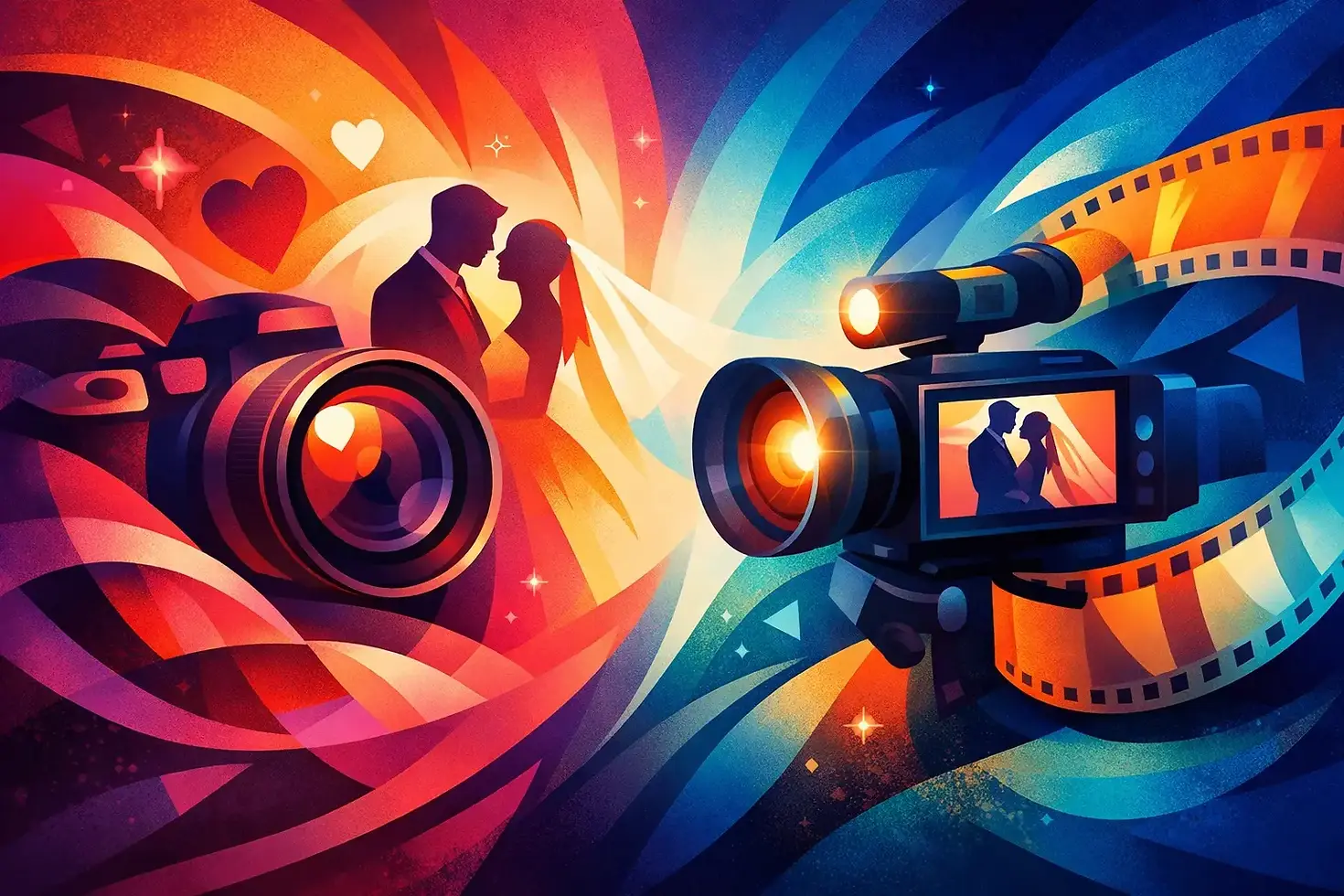
Photography and videography are not interchangeable. They preserve different parts of the same story.
A photographer captures the still frames that become iconic. The look on your partner's face during the first look. Your parents holding hands during the ceremony. The exact color of the sky before sunset portraits. These images are designed to stand on their own. They are the pieces you print, frame, share, and return to for years.
A videographer captures rhythm and emotion in motion. The tremble in your voice during vows. The laughter during speeches. The way your dress moved in the wind. The music, the ocean, the applause, the small sounds that photographs cannot hold. A well-crafted wedding film does more than document events. It brings you back into them.
That difference matters even more in a setting where the environment plays a role in the experience. In a beach ceremony, a cliffside reception, or an island wedding with changing light and weather, movement and sound can be as memorable as the visual details. A cinematic film can preserve the feel of the place, while photography preserves the beauty of the moment.
If you have to choose one, start with how you remember emotion
The better question is not which service is better. It is how you naturally connect to memory.
If you are the kind of couple who already imagines a wedding album on your coffee table, framed portraits in your home, and timeless images passed down through family, photography may be your first priority. Strong wedding photography gives you clarity, elegance, and lasting visual anchors.
If you are drawn to voice, movement, and storytelling, videography may matter more than you first realized. Many couples do not fully understand the emotional value of film until after the wedding, when they hear a parent's speech again or watch their ceremony from a perspective they never experienced in real time.
There is also a practical side. Photos are often easier to share quickly, easier to print, and more naturally woven into everyday life. Video tends to be more immersive, but also more dependent on intentional viewing. Neither is more meaningful by default. It depends on what you want to revisit most.
When booking both makes the most sense
For weddings with multiple moving parts, both services usually create the strongest result. This is especially true for destination celebrations, larger guest counts, cultural traditions, or events where the setting is part of the story.
A destination wedding often includes more than the ceremony itself. There may be a welcome dinner, family arrivals, pre-wedding moments, scenic portraits, and a reception that feels like a full experience rather than a simple timeline. In those cases, photo and video work together. One gives you refined still imagery. The other preserves atmosphere, sound, and continuity.
Booking both also reduces regret. Couples rarely wish they had documented less. More often, they wish they had captured the moments they were too busy to notice. A coordinated team can cover more angles without competing for space, which is especially important during fast emotional moments like the aisle walk, first kiss, speeches, and first dance.
For Fiji weddings in particular, local knowledge can make a visible difference. A team familiar with island light, weather patterns, travel timing, and venue logistics can protect your schedule and your footage in ways that an outside vendor may not anticipate. In a place where scenery is part of the visual promise, technical consistency matters just as much as artistry.
How to decide your budget without guessing
Budget is usually where this decision becomes real. If you cannot book both at the level you want, it helps to think in terms of priorities rather than packages alone.
Ask yourself what moments would feel hardest to lose. If the answer is portraits with family, ceremony images, and editorial-style couple photos, photography may deserve the larger share. If the answer is vows, speeches, reactions, and the emotional arc of the day, videography may be the wiser investment.
You should also think beyond the wedding date. Photos often become part of your daily life. Video may become part of your anniversary ritual, your family archive, and the way you share the day with loved ones who could not attend. Both have long-term value, but they show up differently.
Bundled coverage can also offer a better overall result than hiring separate vendors who have never worked together. A studio that handles both photography and cinematography typically has a shared visual approach, aligned communication, and a smoother production flow. That can mean less friction on the day and a more cohesive final gallery and film.
What to look for in a wedding photographer or videographer
Style should be the first filter, but not the only one. Beautiful work matters, yet wedding coverage is also about timing, direction, reliability, and the ability to perform under pressure.
Look closely at how they capture real moments, not only styled portraits. Can they handle bright tropical sun, indoor receptions, shifting weather, and fast transitions? Do their images feel polished without feeling stiff? Does their film feel cinematic while still reflecting the couple's personality rather than a generic template?
Experience matters because weddings do not pause for second chances. A seasoned team knows when to step in with direction and when to stay invisible. They know how to keep portraits efficient, how to manage a timeline without disrupting the celebration, and how to adapt when the weather changes or a ceremony runs late.
Communication matters just as much. For destination couples, especially those planning from abroad, responsiveness and clarity are part of the service. You want a creative partner who understands travel considerations, venue flow, and the fact that peace of mind is part of what you are paying for.
Sky Vision Studio Fiji has built its reputation around that balance of artistry and precision, offering couples cinematic coverage shaped by real local experience. That kind of destination-specific knowledge can be just as valuable as the camera work itself.
Questions worth asking before you book
A strong portfolio can draw you in, but the right questions help you choose with confidence. Ask who will actually be filming or photographing your wedding, how many hours of coverage are included, and whether the team has worked at your venue or in similar conditions.
You should also ask about delivery. How many edited images can you expect? What type of wedding film is included? Will you receive a highlight film, a longer feature edit, or both? If audio is important to you, ask how vows and speeches are recorded. If you care about candid moments, ask how they approach direction versus documentary coverage.
And if you are deciding between one service and both, ask them to show you complete examples. A full wedding gallery or complete film reveals much more than a highlight reel or a few portfolio favorites. You want consistency, not just standout moments.
The right choice is the one you will feel years later
A wedding is full of moments you will see and moments you will miss. The right coverage preserves both. If you are choosing between a wedding photographer or videographer, start with the kind of memory you want to hold in your hands and the kind you want to feel all over again.
For some couples, one service is enough. For others, the real answer is both, done well, by a team that knows how to tell the story with elegance and intention. When the day is over, what remains is not just proof that it happened. It is the way it looked, the way it sounded, and the way it felt.


Comments